
Understanding VNM
What Is Virtual Net Metering?
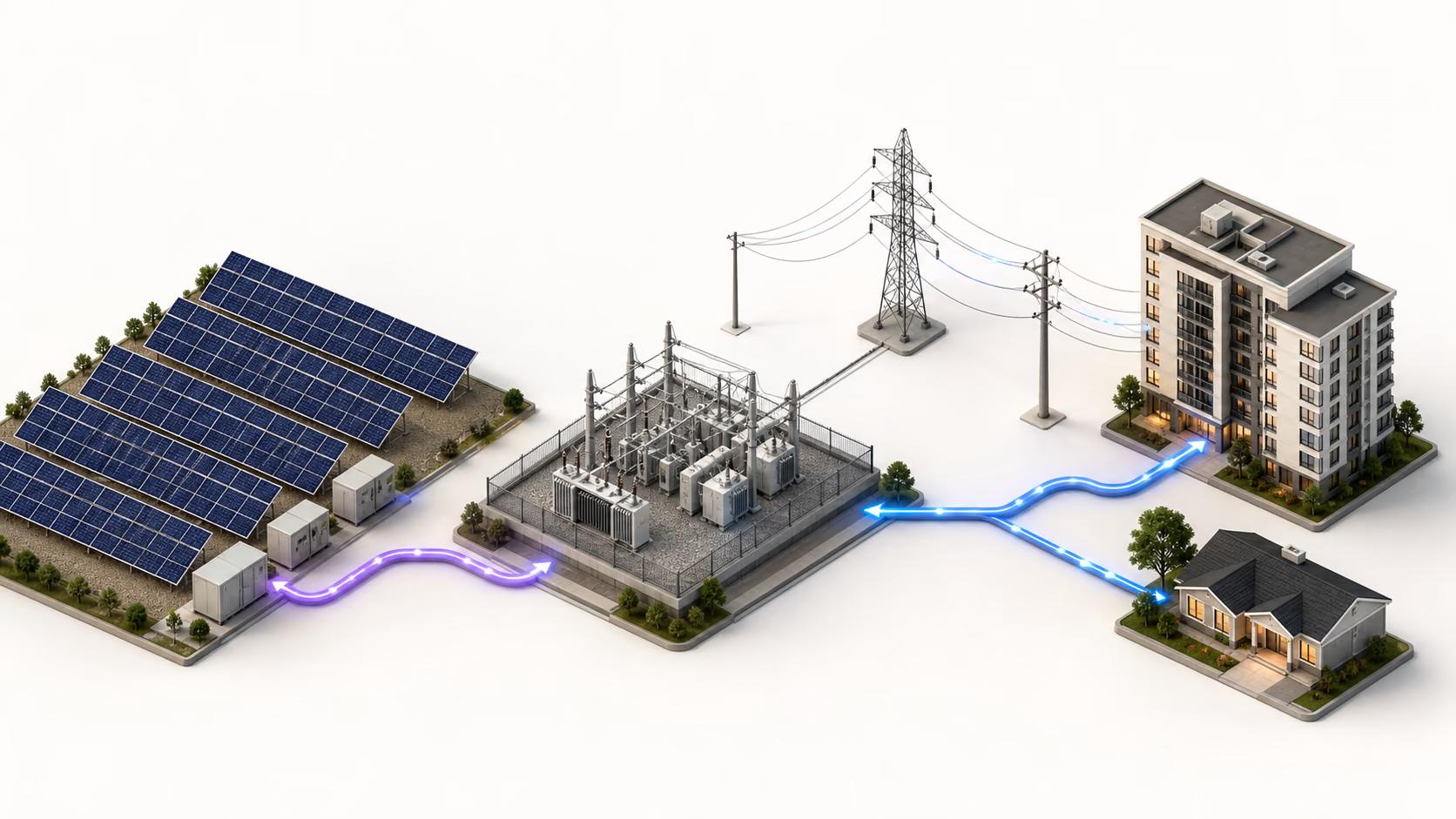
Virtual Net Metering (VNM) is a regulatory billing mechanism that can allow eligible electricity generation from a solar facility to be allocated as credits among participating electricity accounts at different locations, subject to the applicable regulatory and utility framework.
The term "virtual" refers to the accounting and allocation mechanism. Electricity generated by a solar project is injected into the grid rather than being physically delivered through a dedicated wire from the solar project to each participating consumer.
Simple Explanation
Traditional net metering: Solar on your premises → electricity is measured at your connection.
Virtual Net Metering: Eligible solar generation elsewhere → credits are allocated through the applicable billing mechanism.
VNM vs. Traditional Net Metering
The key difference is where the solar generation is located and how the resulting electricity benefit is accounted for.
This table is a general guide. Actual eligibility, billing and settlement treatment depend on the applicable framework, project arrangement and electricity connection.
| Aspect | Traditional Net Metering | Virtual Net Metering |
|---|---|---|
| Solar Location | Typically on the consumer premises | Eligible solar generation facility at another location |
| Physical Connection | Solar system connected at the consumer premises | Generation and consumption locations are accounted for separately |
| Metering | Metering at the consumer premises | Generation metering plus applicable allocation and billing mechanism |
| Rooftop Required | Generally yes | Not necessarily |
| Apartment Access | Can be constrained by rooftop availability | May provide an alternative where permitted |
| Renter Access | Can be difficult because of installation constraints | May be possible where permitted |
| Maintenance | Associated with the rooftop system | Typically handled at project level |
| Siting | Constrained by the consumer premises | Can potentially use a suitable solar site |
| Scale | Often smaller distributed systems | Can support larger shared projects where permitted |
| Regulation | Applicable net-metering framework | Applicable VNM or related framework |
VNM can involve allocation rules, settlement rates, charges, adjustment limits and timing differences. These may vary by state, DISCOM, project and consumer category.
How It Works
How VNM Works: Step by Step
Solar Generation
An eligible solar project generates electricity that is measured using the applicable metering arrangement.
Grid Injection
Generated electricity is injected into the electricity grid under the project and utility arrangement.
Allocation
Eligible generation is allocated to participating consumers according to the applicable rules and agreed allocation structure.
Bill Credit
The applicable electricity billing system reflects the resulting credit or adjustment on the consumer account.
Solar Credits
VNM Credit Calculation
The amount of credit a participating consumer receives can depend on several factors.
1. Eligible Solar Capacity
The consumer participation or allocation may be expressed in kW, subject to applicable regulatory limits and the project structure.
2. Solar Project Generation
Actual generation depends on location, solar resource, system size, technology, weather, availability, and operating conditions.
3. Allocated Generation
Eligible generation is allocated according to the applicable consumer allocation or subscription mechanism.
4. Applicable Credit or Settlement Rate
The applicable rate depends on the relevant regulation, tariff, utility rules, and project arrangement.
5. Electricity Bill Adjustment
The applicable allocation is reflected as a credit or adjustment according to the billing mechanism prescribed for the project.
India
State-Level VNM Frameworks
Virtual Net Metering and related managed-solar frameworks are not identical across India. Eligibility, metering, credit allocation, tariffs, settlement, and consumer categories can vary by state and DISCOM.
Important regulatory note
Solar regulations, VNM frameworks, eligibility conditions, tariff treatment, and DISCOM procedures can change. Always verify the current rules with the relevant State Electricity Regulatory Commission, DISCOM, and applicable project documentation before making a financial or contractual decision.
Key VNM Concepts
Sanction Load
The consumer connection capacity can affect the amount of solar participation permitted under the applicable framework.
Consumer Category
Residential, commercial, industrial, institutional, and group consumers may be treated differently depending on the applicable rules.
Billing Cycle
Credits or adjustments are accounted for according to the applicable billing cycle and regulatory mechanism.
Settlement
Banking, rollover, or settlement of unused credits depends on the applicable regulatory and utility framework.
Metering
Solar generation and consumer electricity consumption are measured through the metering arrangements prescribed for the project and utility.
Grid Availability
Generation, grid availability, outages, curtailment, and other operating conditions can affect project output and resulting allocation.
Common Misconceptions
Myth: VNM means free electricity
Fact: VNM does not mean electricity is free. Consumers can still have fixed charges, taxes, other applicable charges, and consumption that is not covered by an applicable solar credit.
Myth: VNM is available everywhere
Fact: Availability depends on the applicable state regulatory framework, DISCOM implementation, consumer category, and project structure.
Myth: VNM credits always equal the retail tariff
Fact: The applicable credit or settlement mechanism varies according to the relevant regulatory and utility framework.
Myth: VNM automatically means you own the solar panels
Fact: Participation and ownership are different concepts. The ownership structure depends on the project and contractual arrangement.
Myth: VNM provides backup electricity during power cuts
Fact: A solar-credit arrangement is not the same as backup power. Battery storage or another backup system is required for electricity supply during grid outages.
Official sources
Regulations, programme rules and financial assistance can change. Verify the current position with the responsible authority before relying on an estimate or entering an agreement.
Last regulatory review: September 2026
OERC
Community solarisation — Case No. 21 of 2024
The Odisha regulator’s case record for the DISCOM application concerning distributed renewable plants and community solarisation.
View official source →OERC
Order in Case No. 21 of 2024
The Commission order concerning the Odisha community-solarisation proposal. Review the complete order and later proceedings before relying on a project structure.
View official source →TPWODL
Community Solarization application
The DISCOM filing describing the proposed rural community-solarisation and Virtual Net Metering mechanism.
View official source →MNRE
PM Surya Ghar National Portal
Official programme information and current implementation material for eligible rooftop-solar pathways.
View official source →
Explore Lumifly
Ready to explore solar beyond the rooftop?
Learn how community solar works, explore your potential savings, or find out whether Lumifly may be suitable for your electricity connection.