
The Core Idea
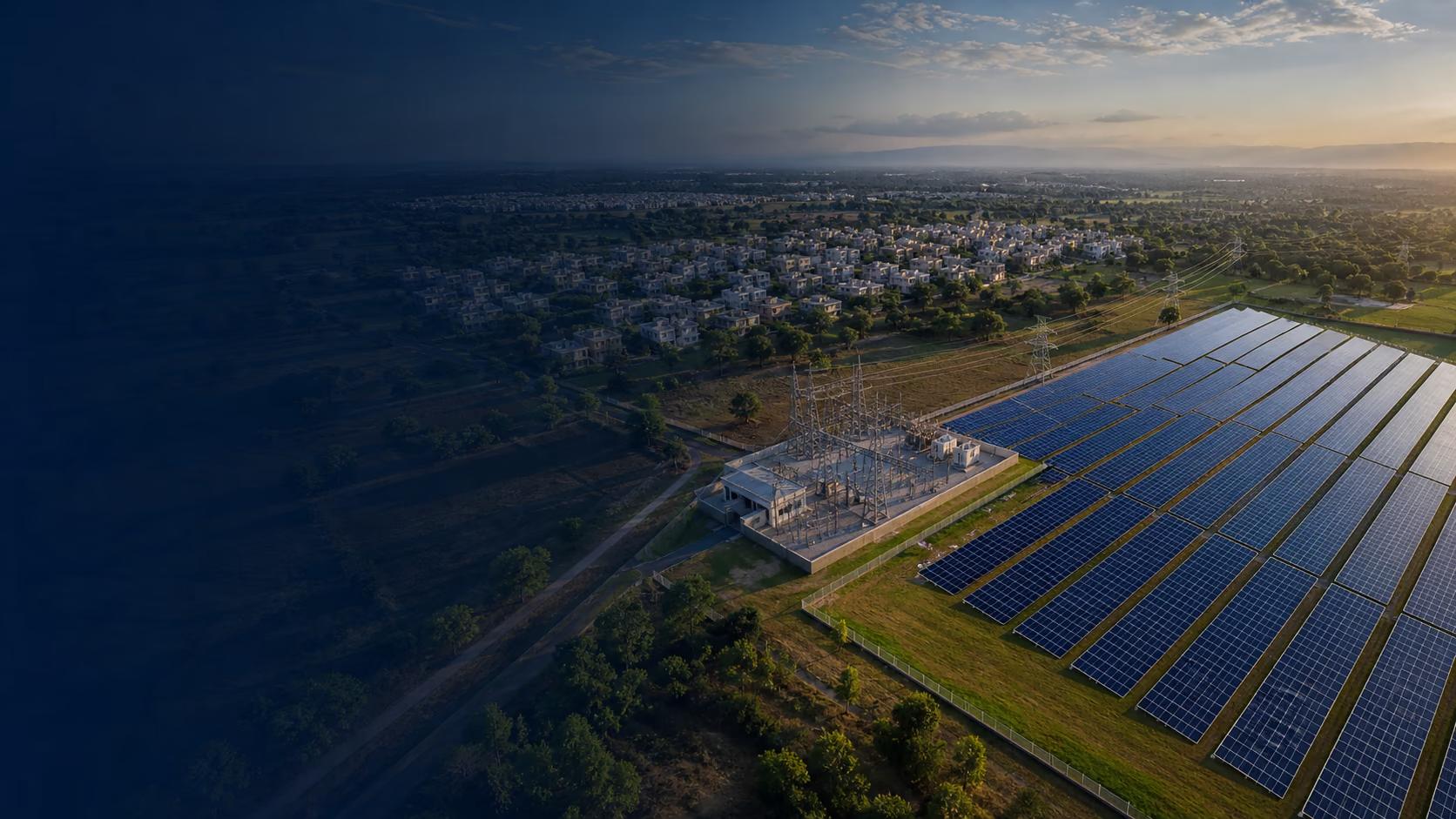
Community solar, also called managed solar, describes a model where multiple electricity customers participate in or benefit from the output of a common solar generation project.
Instead of every household installing a separate system on its own roof, a larger solar project can serve multiple participants. Where an applicable regulatory and utility framework allows it, generation can be allocated among participating electricity connections and reflected through the relevant billing-credit mechanism.
Community solar describes the shared-project model. Shared access describes receiving an allocated benefit from that project, while ownership describes the rights defined in the applicable project agreement. These terms are related, but they are not interchangeable.
Lumifly is an ownership-led community solar platform
Community solar can describe several structures, including subscriptions. Lumifly's proposition is a professionally managed solar-farm share. The specific project documents must define the participant's rights, allocation, payment milestones, regulatory dependencies and 20-year management terms before any commitment.
Simple Analogy
Think of it like a community vegetable garden rather than growing tomatoes on your own balcony. Multiple people benefit from a shared growing space while a dedicated team manages the garden. The exact participation and ownership model, however, depends on the project.
How It Works: Step by Step
Participate
Choose a capacity or energy participation level, subject to project and eligibility requirements.
Generation
The project generates solar electricity and is operated and maintained according to its project design.
Grid Injection
Where approved, the project exports electricity through its grid connection and applicable metering arrangements.
Bill Crediting
Applicable generation is allocated or credited to participating electricity accounts under the relevant framework.
Participation Models
Capacity Participation (kW)
You participate against a defined capacity allocation, such as 3 kW. Actual generation and resulting credits can vary with project performance and seasonal conditions.
Energy-Based Participation (kWh)
Participation is structured around an agreed energy quantity or allocation. Availability and predictability depend on the project's contractual and regulatory model.
Ownership / Cooperative Model
Participants may collectively own or finance a project through a cooperative or similar structure. Rights, responsibilities, and economics depend on the project.
Subscription-Based Model
A developer or project operator provides participation rights under a subscription agreement. Review all fees, contract duration, exit provisions, and crediting terms before joining.
Who Is Community Solar For?
Apartment Residents
Potentially useful where rooftop access or individual rooftop installation is impractical and the applicable framework permits participation.
Renters
May be an option where the electricity connection and applicable program rules allow participation without installing equipment at the rented property.
Unsuitable Roofs
Can provide an alternative for properties with shading, limited roof area, structural constraints, or other installation challenges.
Simplicity Seekers
May avoid having to install and maintain solar equipment at the consumption premises.
Small Commercial
Potential option for shops, clinics, and offices with limited or unsuitable roof space, subject to eligibility.
Housing Societies / RWAs
May support common-area or group participation where permitted by the applicable utility and regulatory framework.
Industrial Parks
Larger commercial or industrial consumers may explore shared generation structures where regulations permit.
Institutions
Schools, hospitals, and other institutions may explore managed solar as part of their energy strategy, subject to applicable rules.
Virtual Net Metering: One Possible Enabler
Virtual Net Metering (VNM) is a regulatory mechanism that, where approved, can allow electricity generation associated with an eligible solar project to be allocated or credited across participating electricity connections. It separates the project's generation location from the participating consumer's location, subject to the applicable rules.
How VNM-Style Crediting Can Work
- Generation: The solar project produces electricity measured through the applicable metering infrastructure.
- Allocation: Eligible generation is allocated according to the approved participation or allocation methodology.
- Crediting: The applicable solar credit or adjustment is reflected against participating electricity accounts according to utility rules.
- Settlement: Billing reconciliation and settlement occur according to the applicable tariff, regulations, and utility procedures.
- Rollover: Treatment of unused or excess credits, if any, depends on the applicable regulatory framework.
Important: VNM is not a universal framework across India. Rules can differ by state, DISCOM, consumer category, project type, metering arrangement, and current regulatory orders. Always verify the current rules applicable to your electricity connection before making a decision.
Potential Benefits of Community Solar
No rooftop installation at the participating premises where the applicable model permits remote participation
Professional project operation and maintenance
Potential access to project sites selected for solar resource and grid considerations
Potential economies of scale compared with very small installations
Ability to select a participation level subject to project availability and eligibility
Potential transfer or continuity options where explicitly permitted by the program and agreement
Subscription structures may reduce the need for direct ownership of rooftop equipment
Centralized monitoring and project-level electrical infrastructure
Limitations & Considerations
Regulatory Availability
Community or managed solar participation may depend on an active regulatory and utility framework. Availability can change over time.
DISCOM Eligibility
Your electricity connection may need to meet specific eligibility requirements, including consumer category, service area, sanctioned load, and metering conditions.
Consumer Category Limits
Some programs may limit participation to specific consumer categories or impose different rules for residential, commercial, institutional, or industrial consumers.
Credit Rates
Applicable credit values may differ from the retail electricity tariff. Understand the relevant crediting methodology before subscribing.
Subscription Terms
Review contract duration, fees, exit terms, transferability, generation assumptions, performance provisions, and dispute mechanisms.
No Direct Ownership
Participation does not necessarily mean ownership of specific panels. Ownership and usage rights are determined by the project structure and agreement.
State-Wise Status in India (Indicative)
| State | Regulator | VNM / Managed Solar Position | Notes |
|---|---|---|---|
| Odisha | OERC | Check current framework | Eligibility and implementation depend on current OERC and DISCOM provisions. |
| Delhi | DERC | Check current framework | Applicable arrangements depend on current DERC regulations and utility procedures. |
| Karnataka | KERC | Check current framework | Verify current KERC orders and the applicable DISCOM implementation. |
| Gujarat | GERC | Check current framework | Eligibility and crediting depend on current GERC provisions and DISCOM rules. |
| Other States | State ERC | Varies | Availability, consumer eligibility, metering, and crediting can differ significantly. |
Disclaimer: Regulatory status can change. This table is intentionally indicative rather than a legal or regulatory determination. Verify the current rules, orders, tariffs, and implementation procedures with the relevant State Electricity Regulatory Commission and DISCOM before making decisions.
Community Solar vs. Rooftop Solar
| Factor | Rooftop Solar | Community / Managed Solar |
|---|---|---|
| Generation Location | At or near the consumption premises | Separate shared generation project |
| Rooftop Required | Generally yes | Not necessarily, depending on the model |
| Installation at Home | Yes | Generally no |
| Maintenance | Owner / contracted service provider | Project operator / contracted O&M |
| Siting Flexibility | Limited by property and roof conditions | Project can be sited separately, subject to land and grid considerations |
| Upfront Cost | Equipment and installation investment | Depends on subscription or participation structure |
| Portability | Generally difficult after installation | May be possible under specific program and contract rules |
| Regulatory Model | Net metering / applicable rooftop framework | Shared allocation / VNM or another approved mechanism |
How to Explore Community Solar
1. Check Your Eligibility
Enter your location, DISCOM, and electricity details to determine whether a relevant managed-solar or VNM pathway may be available.
2. Estimate Your Solar Share
Estimate indicative capacity, generation, savings, and payback based on your electricity consumption.
3. Explore Available Solar Projects
View Lumifly's solar network nodes, project capacity, status, and potential allocation availability.