
The Simple Definition
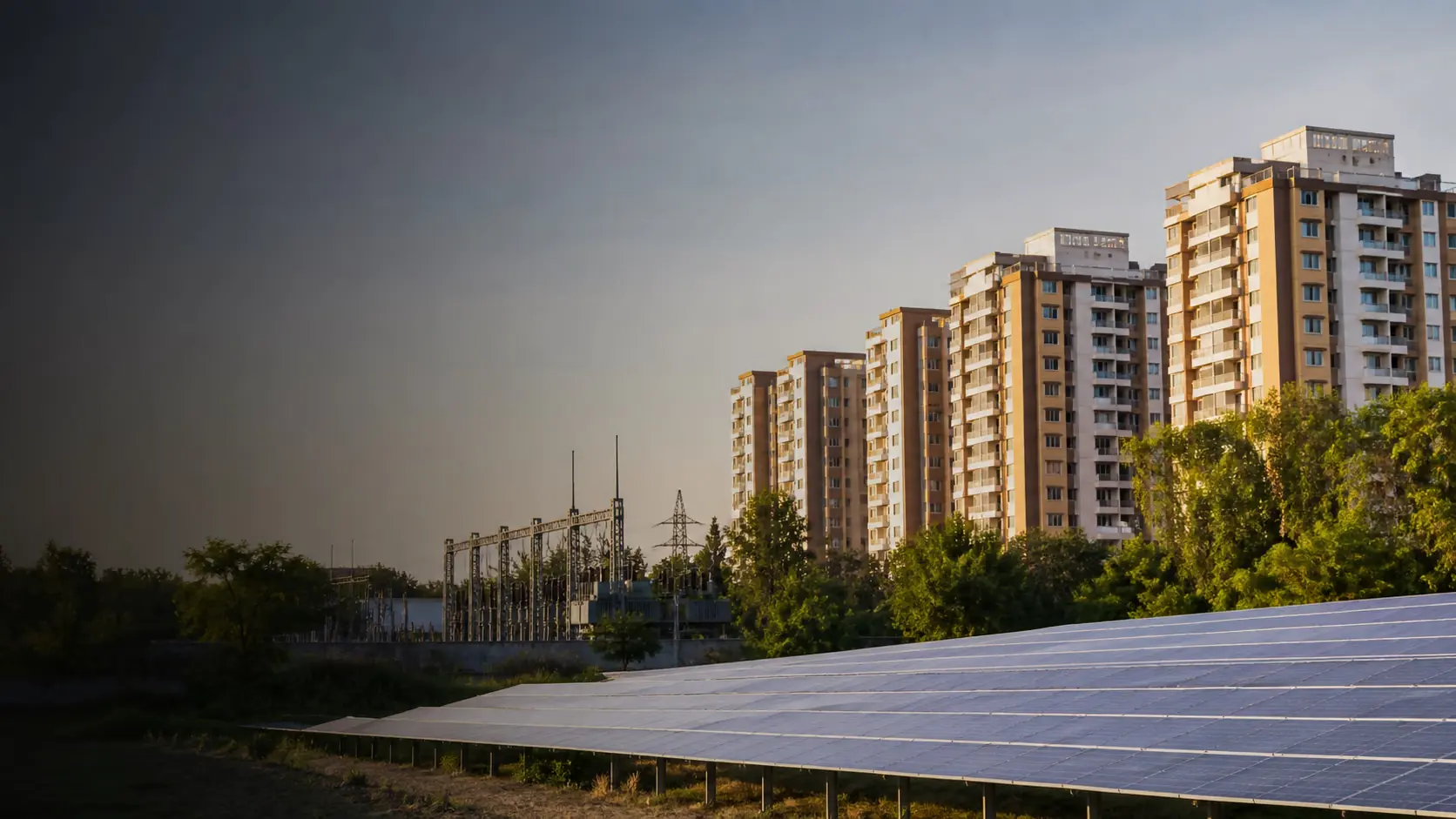
Managed solar is a model where multiple electricity customers participate in a larger solar installation instead of each customer installing a separate rooftop system. The solar project can be located where land, grid access, and solar conditions are suitable rather than being constrained by an individual rooftop.
You may also see shared solar used as a broader market term for off-site or multi-participant solar projects. Lumifly uses Managed Solar as the primary customer-facing term because it emphasizes professional project development, operations and maintenance.
Depending on the applicable regulatory and project framework, participants may receive energy or financial credits associated with their allocated share of the solar project's generation. Virtual Net Metering (VNM) is one regulatory mechanism that can enable this type of remote allocation.
Managed solar describes a professionally operated solar model designed to simplify participation for eligible customers
A shared project may use ownership, capacity participation, subscription access or another contractual structure. Those labels are not interchangeable. The project offer and customer agreement must state what the participant receives, who owns the equipment, how payments work, how generation is allocated, and which transfer or exit terms apply.
The Core Idea
Instead of every household installing a small solar system on its own roof, a larger solar project can be developed in a suitable location. Multiple eligible consumers can then participate in the project according to its structure and applicable regulations.
How Managed Solar Works
Choose a Structure
Review the ownership, participation or subscription structure and choose an allocation based on your electricity use and eligibility.
Farm Generates
The solar project generates electricity using utility-scale or distributed solar infrastructure.
Grid Injection
Generated electricity is delivered to the grid through the project’s approved interconnection and metering arrangement.
Bill Credits
Where permitted, eligible generation is allocated to participating electricity accounts under the applicable framework.
Managed Solar vs. Rooftop Solar
| Factor | Rooftop Solar | Managed Solar |
|---|---|---|
| Rooftop Required | Yes | No |
| Home Ownership | Often easier for property owners | Not necessarily required |
| Installation at Home | Yes | No |
| Maintenance | System owner responsibility | Typically handled by project operator |
| Siting Flexibility | Limited by roof | Can use suitable project locations |
| Upfront Cost | System purchase or financing required | Depends on project and subscription model |
| Portability | Relocation can be difficult | Depends on applicable regulations and agreement |
| Regulatory Model | Net metering or other applicable mechanism | May use Virtual Net Metering or another approved mechanism |
Who Is Managed Solar For?
Apartment Residents
If you don't have suitable rooftop access, a managed solar model may provide another way to participate in solar generation.
Renters
Depending on the project and regulations, renters may be able to participate without installing equipment on the property they rent.
Unsuitable Roofs
Tree cover, poor orientation, structural limitations, or insufficient roof area do not necessarily prevent participation in a remote solar project.
Simplicity Seekers
Managed solar can avoid the need for equipment installation and ongoing system maintenance at your home.
Virtual Net Metering: The Enabler
Virtual Net Metering (VNM) is a regulatory mechanism that can allow electricity generation from an approved solar project to be allocated across eligible electricity accounts. Unlike conventional rooftop net metering, the generation and consumption locations can be different, subject to the applicable rules.
How VNM Credits Work
- •Generation: The solar project produces electricity, measured using approved metering.
- •Allocation: Eligible generation is allocated among participating consumers according to the applicable methodology.
- •Credit: Where permitted, the allocated energy is reflected against the consumer's electricity account.
- •Settlement: Settlement and billing treatment follow the applicable regulatory framework.
- •Rollover: Treatment of unused credits, if any, depends on the applicable rules.
Important: VNM and managed-solar regulations vary by state and DISCOM. Eligibility, credit treatment, settlement cycles, consumer categories, metering requirements, and project structures can change. Always verify the current rules applicable to your electricity connection.
Benefits of Managed Solar
No rooftop required — useful for apartments, renters, and properties with unsuitable roofs
Professional O&M — project-level operation and maintenance
Optimal siting — projects can be developed in locations suitable for solar generation
Economies of scale — larger projects can benefit from scale efficiencies
Scalable — participation can be structured around electricity requirements
Potential portability — subject to the applicable utility framework and subscription agreement
Flexible payment models — depending on the project structure
Grid-level infrastructure — centralized monitoring, metering, and project management
State-Wise Status in India (Indicative)
| State | Framework | Status | Key DISCOMs |
|---|---|---|---|
| Odisha | State-specific distributed / group solar framework | Verify current rules | TPCODL, TPWODL, TPNODL, TPSODL |
| Delhi (NCT) | DERC framework | Verify current rules | BRPL, BYPL, TPDDL |
| Karnataka | KERC / DISCOM applicable framework | Verify current rules | BESCOM, MESCOM, GESCOM, HESCOM, CESC |
| Gujarat | GERC applicable framework | Verify current rules | PGVCL, UGVCL, DGVCL, MGVCL |
| Maharashtra | MERC applicable framework | Verify current rules | MSEDCL, Adani Electricity, Tata Power, BEST |
Disclaimer: Regulatory status changes over time. This table is indicative and should not be treated as a legal or regulatory determination. Always verify the current regulations, orders, circulars, and eligibility requirements with the relevant state electricity regulatory commission and DISCOM.