The Simple Definition
Solar energy is radiant light and heat from the Sun. It is the most abundant energy resource available to humanity. Every day, the Sun bathes our planet in ~173,000 terawatts of power — over 10,000 times what humanity consumes.
We harness this energy in two main ways:
Photovoltaic (PV)
Sunlight → electricity directly via solar panels. Powers homes, businesses, grids.
Solar Thermal
Sunlight → heat via collectors. Hot water, space heating, or concentrated solar power (CSP) for electricity.
How Solar Panels Generate Electricity
The photovoltaic effect, discovered in 1839, is the heart of solar PV:
Photons Strike Silicon
Sunlight consists of photons. When they hit the silicon atoms in a PV cell, they transfer energy to electrons.
Electrons Break Free
Energized electrons break free from their atomic bonds, creating an electric current.
Electric Field Drives Current
The cell has a built-in electric field (p-n junction) that pushes free electrons in one direction, creating DC current.
Inverter Converts to AC
An inverter changes DC to AC (alternating current) — the form used by appliances and the grid.
Power Flows to Loads
Your home uses solar first. Excess exports to grid (net metering) or charges batteries. Deficit imports from grid.
Types of Solar Installations
Rooftop Residential
3–10 kW on home roof. Net metering. Best for independent houses with good sun.
Rooftop Commercial
10 kW–1 MW on factories, malls, offices. High tariff savings. Accelerated depreciation benefit.
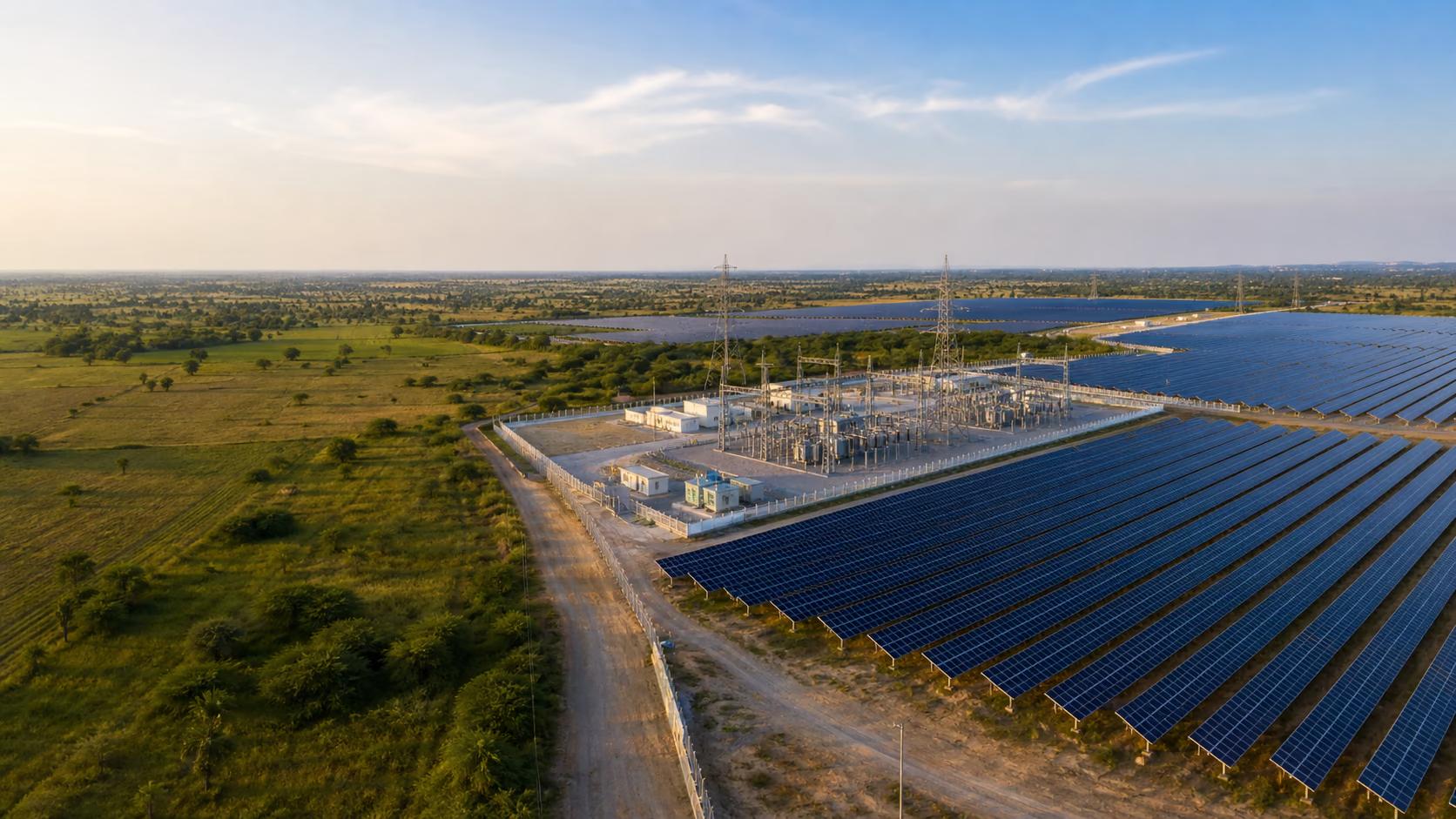
Ground-Mount Solar Farm
MW-scale on land. Utility-grade. Lowest ₹/kWh. Feeds grid directly or via VNM.
Floating Solar
On reservoirs/lakes. Reduces evaporation. Cooler panels = higher efficiency. Land-neutral.
Solar Energy in India
India is uniquely positioned for solar:
300+
Sunny Days
Per year in most states
80+ GW
Installed Capacity
As of 2024 (4th globally)
280 GW
2030 Target
Solar-specific under 500 GW non-fossil goal
Key states: Rajasthan, Gujarat, Karnataka, Tamil Nadu, Maharashtra, Telangana, Andhra Pradesh, Madhya Pradesh,Uttar Pradesh, and Odisha lead in installations. The PM Surya Ghar scheme aims to add 30 GW of residential rooftop solar by 2027.
Why Solar Matters
Reduces dependence on imported coal and oil — energy security
Lowers electricity bills for households and businesses
Creates local jobs: manufacturing, installation, maintenance, sales
Cuts carbon emissions and air pollution — cleaner air, healthier communities
Improves grid resilience when distributed across millions of rooftops and farms
Enables energy access in remote/off-grid areas where grid extension is costly
Solar Beyond Rooftops
Not everyone can install rooftop solar. Apartment residents, renters, those with shaded or structurally unsuitable roofs, and people who simply don't want panels on their property have historically been excluded from solar benefits.
This is where community solar and managed solar models come in. Through Virtual Net Metering (VNM), solar generation from a managed solar farm can be allocated to participating electricity connections, with credits appearing directly on their utility bills.